
Custom Perfume Bottles: MOQ, Molds & Lead Times (2026 Guide)
Custom Perfume Bottles: The Complete Buyer’s Guide to MOQ, Molds & Lead Times
Launching a fragrance is exciting — until you start sourcing the bottle. Suddenly you’re facing unfamiliar terms: crystalline white glass, FEA neck finish, golden sample, mold cavities, PVD. Get these decisions right and your packaging elevates the juice inside. Get them wrong and you lose months.
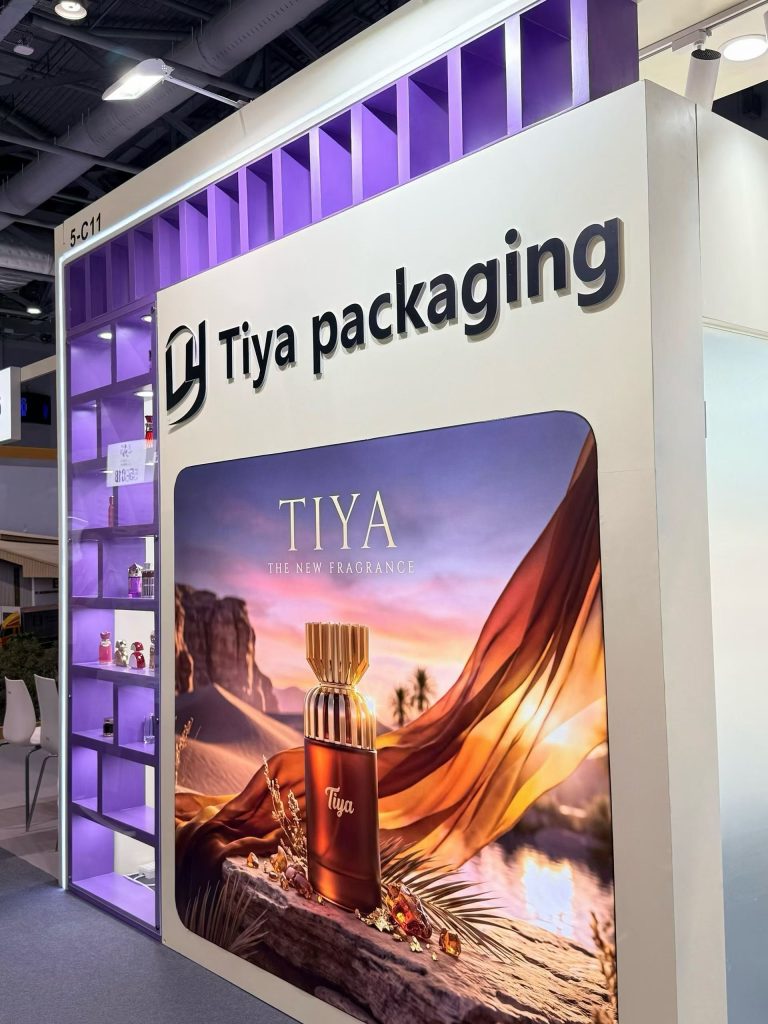
This guide is written from the factory floor. Since 2003, Tiya has designed and manufactured perfume bottles, zamac caps and gift boxes for 100+ fragrance brands — all in-house. Here’s exactly how custom perfume bottle projects work: what you can customize, what MOQs really mean, how molds are made, and the lead times you should actually plan around.
Three Ways to “Customize” a Perfume Bottle
Not every brand needs a brand-new glass mold. In practice, customization happens at three levels:
Level | What you get | Tooling needed | Typical MOQ | Best for |
|---|---|---|---|---|
1. Stock bottle + custom decoration | Proven shape, your colors, logo and finish | None (printing plates only) | From 3,000 pcs | First launches, indie brands, fast timelines |
2. Stock bottle + custom cap | Signature look via an exclusive zamac or surlyn cap | Cap mold only | Cap-dependent | Brands wanting distinction without glass tooling |
3. Fully custom glass mold | Exclusive silhouette, owned by you | Glass mold (+ cap mold if needed) | Typically 10,000 pcs | Established lines, iconic flagship flacons |
Most successful launches start at Level 1 or 2 and graduate to Level 3 once sales justify exclusivity. You can browse stock and custom options on our perfume bottle collection page.
Choose Your Glass: Four Grades, Four Looks
Glass quality is the first thing a customer feels, even if they can’t name it. Perfume bottles are typically produced in four grades:
- Crystalline white (super flint): the highest clarity, brilliant and almost water-white. The standard for luxury and collector editions.
- High white: excellent clarity at a more accessible cost point — the workhorse of premium fragrance lines.
- Ordinary flint: slight tint, perfectly serviceable for mass-market and promotional products.
- Colored glass: tinted in the furnace itself (amber, green, blue, black), so the color won’t scratch off like a coating.
Two details worth specifying in your brief: glass weight (a heavier base adds perceived luxury and stability) and lead-free composition. All Tiya glass formulations are 100% lead-free and food-safe, compliant with REACH and California Prop 65 — documentation your retail partners will eventually ask for.
MOQ Explained: Why Minimums Exist (and How to Start Small)
Glass furnaces run continuously; decoration lines need setup time; mold cavities produce in batches. That’s why factories set minimums — not to shut out small brands, but because below a certain volume, per-unit costs spiral.
At Tiya:
- Stock-shape bottles: MOQ from 3,000 pcs, decorated to your brand.
- Fully custom molds: typically 10,000 pcs, because a dedicated mold needs volume to amortize.
- Low-MOQ sampling is available first, so you can validate the design before committing.
Three practical ways to keep MOQs manageable:
- One bottle, many SKUs. Run your 30 ml, 50 ml and 100 ml sizes on shared design language, or use one shape with different decoration per scent.
- Share caps across the line. A single signature zamac cap used on every bottle builds brand recognition and consolidates cap volume.
- Start with decoration, not tooling. A stock shape with a distinctive gradient coating and hot-stamped logo can look fully bespoke at a fraction of the commitment.
The Custom Mold Process, Step by Step
Here’s the realistic timeline of a full custom project, from first email to finished goods:
- Brief & specification. Capacity, neck finish, pump type, target markets, decoration ideas. A sketch or even a mood board is enough to start.
- 3D renderings — 7–14 days. Our design team turns your brief into detailed concept sketches and photorealistic renders for approval.
- Mold making. Precision cavities are machined in our own mold room — no third-party queues, full control over tolerance and surface finish. More cavities mean higher output per run, but higher tooling investment; we spec this to your volume.
- Golden sample — 3–6 weeks from brief. Physical samples from the actual mold, decorated as production will be. This sample becomes the contractual quality reference. Approve it carefully.
- Mass production — 25–45 days after approval. Glass, caps and decoration run in parallel inside one campus, with inline quality checks.
- QC & shipping. AQL inspections, drop-testing and carton validation before door-to-door logistics.
Total: roughly 2–3 months from brief to ex-works, plus transit. Brands that plan sampling and shipping into their launch calendar hit their dates; brands that count only production days don’t.
Who owns the mold?
You do. Every Tiya project begins with a mutual NDA, and custom tooling is your exclusive IP — we never reuse it for other clients. Get this in writing with any supplier you evaluate.
Neck Finishes & Pumps: The Spec Most First-Time Buyers Miss
The most common — and most expensive — rookie mistake is designing a bottle before choosing its pump.
- Crimp neck (FEA standard): the classic perfume finish, locked with a crimped pump for a tamper-evident, airtight seal. FEA 15 is the industry-standard size most stock pumps fit.
- Screw neck: chosen for refillable lines, a growing sustainability story in fragrance.
Your pump determines the neck; your neck determines the mold; your cap must clear the pump actuator with the right internal height. Lock these three components together before tooling. Because we produce bottles, pumps, shoulders and caps in-house, fit is verified as a system — not blamed on three different suppliers.
Decoration Compared: Four Finishes, Four Personalities
Finish | Look | Strengths | Watch-outs |
|---|---|---|---|
Screen printing | Crisp logos, text, line art | Durable, precise, cost-effective | Each color is a separate pass |
Hot stamping | Mirror gold/silver foil | Instant luxury cue | Best on flat or gently curved areas |
Spray coating | Solid, matte, gloss or gradient color | Full-bottle transformation; gradients are signature looks | Color must be approved on physical samples, not screens |
PVD | Metallic mirror chrome | Jewelry-like reflectivity | Premium process; specify abrasion requirements |
Multi-pass decoration (say, gradient coating + hot stamping + screen printing) multiplies both effect and setup time — budget for it. And if you already own bottles, our decoration lines run as a standalone service on client inventory. For where finishes are heading next, see our 2026 perfume packaging trends report.
Caps: Zamac, Surlyn, Aluminum or Plastic?
The cap is the handshake of your fragrance — the first thing touched, and the heaviest signal of quality.
- Zamac (zinc alloy): substantial weight, cool metal feel, galvanized, brushed or polished finishes. The luxury benchmark, and Tiya’s founding craft.
- Surlyn: glass-like transparency with excellent toughness and perfume resistance — ideal for crystal-clear sculptural caps.
- Aluminum: lightweight, anodizable, modern; a strong mid-premium choice.
- Plastic (PP/ABS): the budget workhorse; metallization can convincingly mimic metal at high volume.
Rule of thumb: match cap weight to price positioning. A heavy zamac cap on an entry-level juice raises COGS without raising conversion; a thin plastic cap on a $200 extrait undermines everything the glass worked for.
What Actually Drives Your Unit Price
Rather than chasing a single “bottle price,” understand the five levers:
- Glass grade & weight — super flint and heavier bases cost more per unit.
- Decoration passes — each additional process adds setup and handling.
- Cap material & finish — zamac with multi-step plating sits at the top; plastic at the base.
- Order quantity — the biggest lever; unit costs drop meaningfully as volume climbs.
- Tooling — a one-time mold fee, separate from unit price. Ask whether it can be amortized or rebated against repeat orders; policies vary by supplier.
A credible quotation always itemizes these. If a supplier gives you one all-in number with no breakdown, you can’t negotiate intelligently later.
How to Choose a Perfume Bottle Manufacturer
Ask every candidate these questions:
- Which processes do you own? “In-house” should mean design, mold room, glass production, cap manufacturing and decoration under one roof — not a trading company with a nice showroom.
- Which certifications can you document? ISO 9001 quality systems, REACH and RoHS material compliance, Prop 65 for the US, FSC board for gift boxes.
- What is your golden sample policy? No production without an approved physical reference.
- What AQL level do you inspect to, and do you drop-test cartons?
- Will you sign an NDA and confirm mold ownership in writing?
One-stop suppliers also eliminate the quiet killer of packaging projects: color drift between a bottle factory, a cap factory and a box factory, each matching to a different sample under different lighting.
Five Mistakes That Delay Launches
- Designing the bottle before locking the pump and neck finish.
- Approving colors on a monitor instead of a decorated physical sample.
- Splitting bottle, cap and box across unrelated suppliers.
- Skipping transport validation — drop tests and carton specs prevent warehouse heartbreak.
- Counting production days but forgetting sampling weeks and ocean transit.
FAQ
What is the typical MOQ for custom perfume bottles?
Stock shapes with custom decoration commonly start around 3,000 pcs; fully custom glass molds typically require 10,000 pcs or more. Low-MOQ sampling lets you validate before committing.
How long does a custom perfume bottle project take?
Plan on 3–6 weeks from brief to golden sample, then 25–45 days of mass production after approval, plus shipping — roughly 2–3 months ex-works in total.
What’s the difference between crystalline white and high white glass?
Crystalline white (super flint) offers the highest, almost water-white clarity for luxury lines; high white provides excellent clarity at a more accessible cost for premium products.
Can a factory decorate bottles I already own?
Yes. Screen printing, hot stamping, spray coating and PVD are widely offered as standalone services on client-owned inventory.
Do I own the custom mold I pay for?
With a reputable manufacturer, yes — confirmed by NDA and contract. Your tooling should never be reused for other clients.
Ready to Start Your Project?
Send a sketch, a spec sheet, or just an idea. The Tiya team responds within one business day with a proposal, timeline and itemized quotation — backed by a 30,000 m² campus, 600 specialists and 23 years of single-material obsession.
Request a quote · WhatsApp: +86 132 4684 8765 · Email: [email protected]